by retargeting | Apr 28, 2016 | E-commerce trends
Remarketing is one of the hottest concepts of the moment and a lot of companies are considering it. And the best part is that the offer is pretty big, so they can choose from a few excellent services. Still, this choice can be pretty hard, especially if you’re looking forward to deciding upon the service that has the most effective services, available at a pocket-friendly price. Since you’re reading this, you’re most likely in this situation, but you’re lucky, since we’ve picked three of the best remarketing services on the market and made a short description for each of them, focusing on their top notch features, in order to make your choice easier. First of all, we have Retargeting.Biz. Their promise is to help you sell more, through their amazing triggers: live ones, through email and through SMS. “Live Cart Saver”, “Live Product Recommender” and “Live Dynamic Subscription” are the live triggers that will help you to keep clients on your website and, even more, increase sales. And don’t worry, they also have a solution for bringing back visitors who left your site without buying, using Cart Saver emails, Product of Interest emails, Cross Selling emails or Inactivity Triggers. Also, they have a secret ace in their sleeve, about which marketers have forgotten: SMS. I mean, everybody checks their phones, right? Next, there’s Granify. Using their one of a kind Decision Engine, they are able to understand digital body language and predict a client’s next move and, if it identifies something that will stop them from purchasing, it automatically displays a message that is able to alter their decision....
by retargeting | Apr 20, 2016 | E-commerce trends
Back in 2008, I was just starting to access the Internet using a phone. Of course, it was a regular, Nokia, feature phone, but just the idea of being able to access the World Wide Web using such a small device was really fascinating. Nowadays, we’re leaving in a permanently connected world, with the Internet being available to everybody and, surprisingly or not, it’s being accessed from mobile devices more and more often. Google said that there are already more searches being made from mobile devices than from PCs and this can have a big impact on websites, especially when it comes to ecommerce. For example, 57 percent of the traffic during this year’s Black Friday season came from smartphones or tablets, while Walmart’s sales from mobile devices almost doubled from 2014 to 2015. Considering this, it’s not surprising to hear a lot of people saying that desktop ecommerce will soon become history, with mobile taking over. Well, we don’t agree with such statements and we will tell you why in a jiffy! First of all, even though traffic from mobile devices is growing blazing fast, it doesn’t always lead to actual sales. Yes, people are opening emails from their phones and even click on those links they’re containing, but in terms of conversions, mobile is way, but waaaay behind desktop. Oh, and the growth rate is very slow, at least for the moment. Secondly, let’s not forget about the checkout process. Heck, there are a lot of people having trouble with this step even on desktop, not just on mobile. When shopping from a smartphone or a tablet,...
by retargeting | Apr 19, 2016 | E-commerce trends
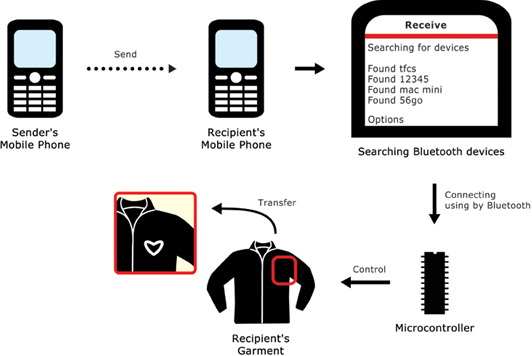
If you like to call yourself a true marketer you should be aware about the continuously growing importance of mobile, the platform of the moment when it comes to digital advertising. Delivering a message on desktop can be hard sometimes, considering that it implies audience targeting, engagement and finally transmitting something, but when the screen gets smaller, things might complicate a bit. But there’s no need to panic, as we have a hint for you. We can call mobile displays as the most personal screens, so there’s no doubt that they’re an untapped opportunity for marketers. By exploiting this intimacy and adding a bit of creativity, you can engage with customers and build brand engagement! The whole secret behind this is appealing to users’ emotions. If you want your message to be received properly, you need to trigger these emotions, which, again, might sound complicated. Unlike live and email triggers offered by Retargeting.biz, emotional triggers are experiences that draw a person back into the past, causing feeling and behaviors to arise. And, believe it or not, you can use these experiences in order to create a memorable user experience on mobile. Here are a few tips on how to do it… Understand emotional triggers …because without this, all your strategy would be in vain. Love, anger, curiosity, fear, trust and guilt are some of the most powerful ones and you should use them wisely. Also, the most powerful the emotion you’re targeting, the more likely it will move someone. Still, you should be aware that triggering these emotions shouldn’t be done too strongly. Be subtle We wanted to mention...
by retargeting | Apr 15, 2016 | E-commerce trends
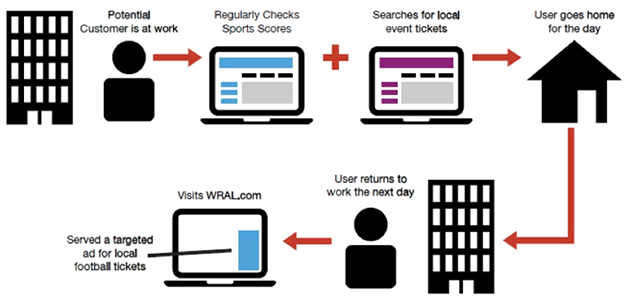
Those times in which marketers were sending the same messages to everybody seem to be history – at least this is what we like to believe – more and more of them being interested in behavioral marketing. The latter is a technique used by publishers and advertisers to increase the effectiveness of their campaigns, using the information collected on users’ individual browsing behavior. Or you can simply call it segmentation based on customer behaviors. Since it’s being used alongside other forms of targeting based on factors like demographics, geography and contextual web page content, a lot of marketers refer to this process as “audience targeting”, but we’ll stick to behavioral targeting for the moment. Ok, but the big question is…how does this thing work? How can behavioral targeting help a site? Well, it’s pretty simple, actually. When somebody visits your website, a cookie is placed into his or her computer. And this little cookie gathers information about the visit, helping the website owner to put the visitor into a specific group or create a profile that links to the visitor’s web browser. From that point, your website will show that users only relevant information. We know, it sounds a bit creepy to hear that somebody, in some way or another, is collecting information about what you’re doing on the Internet, but there’s no need to worry. Here are the main types of behaviors marketers are interested in… IP Address & Geolocation – This is one of the most basic types of segmentations. It’s essential for targeting audience by where they live, in order to show discounts or offers targeted...
by retargeting | Apr 7, 2016 | E-commerce trends
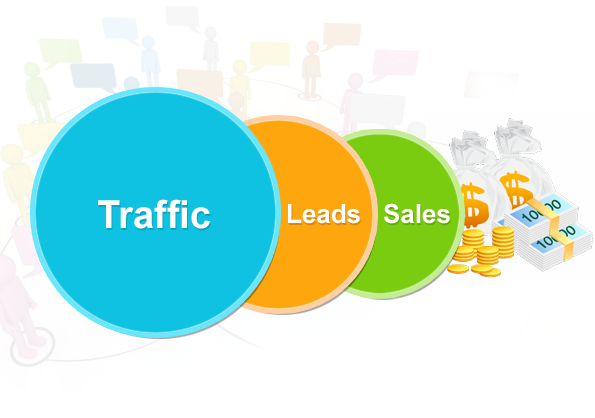
After a long time, your website is finally online. The store is up and running and you’re looking forward to start seeing the first sales. The days come and go and it still doesn’t happen. OK, it’s just the beginning and you’re not losing hope. But after a while it becomes frustrating to see that your website isn’t converting visitors into sales… There’s no need to panic though, as you’re not the only one in this situation. We have identified the main reasons why this is happening and put them in a short list, hoping that you will consider them and start looking for fixes. You don’t have a mobile-friendly website In 2016, this is a must, as more and more people are using smartphones or tablets in order to browse the Web. Actually, Google said that we’ve reached a point in which there are more mobile searches than desktop searches made daily! There are a lot of aspects you should consider when optimizing landing pages for mobile, like using text that’s easy to read, having just one call to action and avoid large chunks of text. Keeping it short, each visitor should access all of your website’s features with just a few swipes. If their mobile experience with your website isn’t satisfying, there’s no wonder they don’t buy anything. Your website is too slow 56 Kbps is already history and you don’t want your site to live in the past. And come on, let’s be honest, we all hate when a website takes ages to load and when it finally does, it’s way too slow, making us to...
by retargeting | Apr 4, 2016 | E-commerce trends
Remember Spike Jonze’s movie, “Her”, where the main character starts developing a really intense relationship with a computer? Everything was the result of an algorithm which was able to read human emotions and adapt to the user’s personality. Of course, this was happening somewhere in the future, but what are the odds of seeing something similar happening soon? Nowadays, a lot of the sites and apps we’re all using daily, like Google, Facebook or Instagram are using advanced algorithms, able to display information tailored to each individual. It’s true, we’re still far from breaking the barrier in human-machine communication, but we’re getting closer to doing it with each day. Let’s take Google for example. It’s no secret that they’re using one of the most complex algorithms ever created and each user sees different results when making them same search, based on their history. Also, Facebook has started showing updates in your news feeds based on the friends and pages you interact with the most, while Instagram did a similar thing this week. But how close are these giants to being able to read emotions? A team of scientists, led by David Bamman and Noah A. Smith, managed to find an answer regarding the relation between words and the emotions they evoke. They believe that not only the given statement should be examined, but also the context in which something is said. The scientists started on Twitter, examining tweets which contained the hashtags “#sarcasm” and #sarcastic” and it turned out that the authors’ profiles and target audiences were the most important factors shaping the meaning. Currently, the results of the...
